
Combine Prep in Las Cruces: What to Work on in the Months Before
November 12, 2026
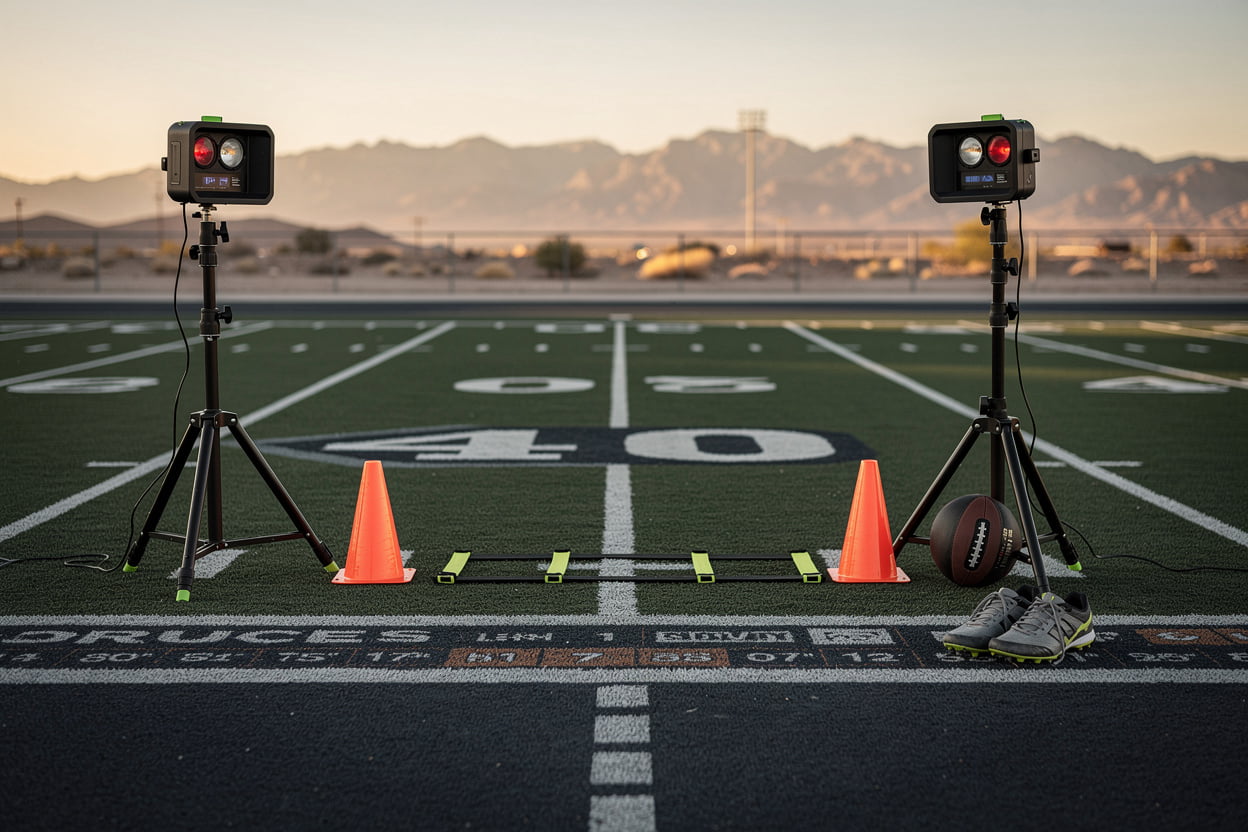
Most athletes who show up to a combine underprepared make the same mistake: they try to get fast in the final two weeks. Speed and jumping numbers move slowly. If you want a real change on testing day, the work starts months earlier.
Know which numbers you are being measured on
Most combines and showcases test some version of the same set: a 40-yard dash or shorter sprint splits, a vertical jump, a broad jump, a pro agility or change-of-direction drill, and sometimes a bench or strength measure. Ask the event which tests they run and what the position-specific drills look like. A linebacker and a point guard are not measured on identical things.
Build the base first
In the first phase, the priority is getting strong enough to produce force and healthy enough to train hard every week. We spend time on hip and ankle mobility, single-leg strength, and posterior chain work. Sprint mechanics get drilled early, before the athlete is tired.
Test, then retest
We run a baseline test at the start and retest every four to six weeks. That gives both the athlete and us a clear picture. If the sprint time has not moved in two cycles, we change the approach. If it has improved but technique is breaking down, we slow down. Data is useful only if you act on it.
The last two weeks
Taper. Reduce volume, keep intensity sharp, sleep more, and stop trying new things. Athletes who run a max effort test on fatigued legs usually post worse numbers than they are capable of.
If your combine is coming up and you are not sure where to start, come in for an evaluation. We will tell you honestly what is realistic in the time you have.